

America Reawakens: Combatting the Far-Left Threat
- 07-18-2026America Reawakens: Combatting the Far-Left Threat Leer en Español In a landmark address before representatives from more than 70 countries at the U.S. State Department's Ministerial Conference on...
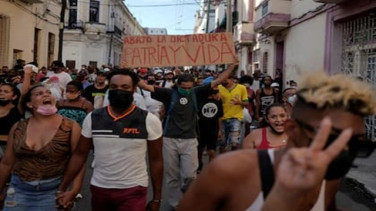
11J at Five: Cuba's Real Unfinished Revolution
- 07-10-202611J at Five: Cuba's Real Unfinished Revolution Photo: REUTERS/Alexandre Meneghini Leer en Español Five years have passed since July 11, 2021 (11J), when thousands of Cubans took to the streets in...
America's 250 th Anniversary: Recovering the Soul of the Republic
- 07-02-2026America's 250 th Anniversary: Recovering the Soul of the Republic Leer en Español The celebration of America's 250th anniversary is more than a commemoration of national independence. It is an...
The Castroist “Reforms”: The Potemkin Façade
- 06-19-2026The Castroist “Reforms”: The Potemkin Façade Leer en Español The Cuban dictatorship’s announcement of 176 economic and social “transformation” proposals should not be mistaken for a historic...
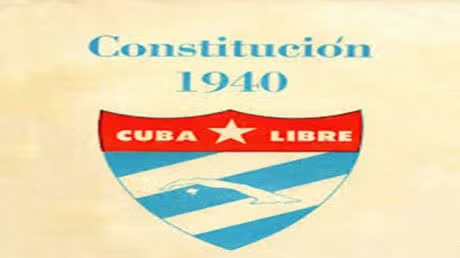
The 1940 Constitution: Cuba’s Democratic Bridge
- 06-12-2026The 1940 Constitution: Cuba’s Democratic Bridge Leer en Español The possibility of a successful democratic transition in Cuba rests upon two historic advantages that distinguish the Cuban case...
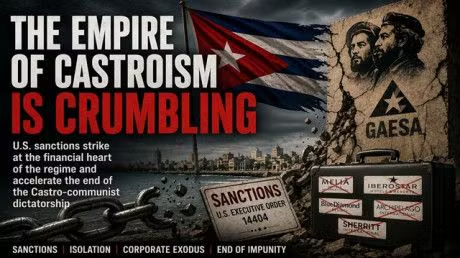
Castroism’s Empire Crumbles
- 06-05-2026Castroism’s Empire Crumbles Leer en Español For decades, opponents of economic pressure against the Castro-Communist regime insisted that sanctions did not work. According to this conventional...
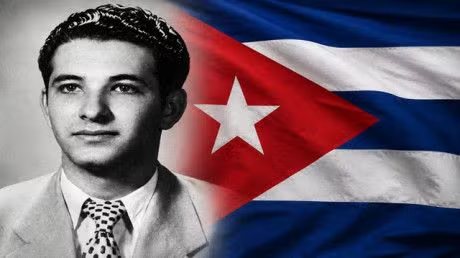
Honoring Pedro Luis Boitel and the Demand for Accountability
- 05-22-2026Honoring Pedro Luis Boitel and the Demand for Accountability Leer en Español This coming Monday, May 25, 2026, marks the 54 th anniversary of the death of Pedro Luis Boitel, a courageous Cuban...
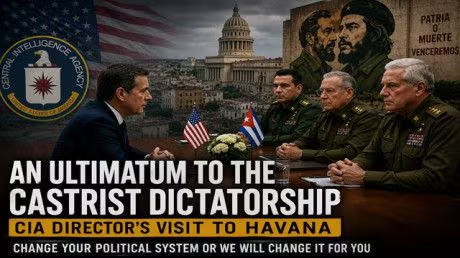
The CIA Director’s Visit to Havana: An Ultimatum in Broad Daylight
- 05-15-2026The CIA Director’s Visit to Havana: An Ultimatum in Broad Daylight Leer en Español The sight is repulsive on its face. A high official of the United States government, the world’s leading...
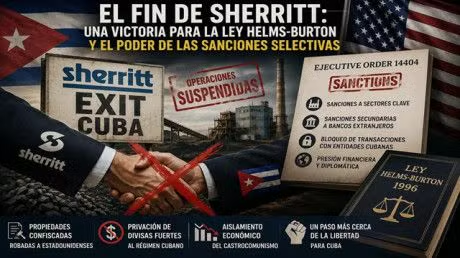
The End of Sherritt: A Victory for Helms-Burton and the Power of Targeted Sanctions
- 05-08-2026The End of Sherritt: A Victory for Helms-Burton and the Power of Targeted Sanctions Leer en Español After more than three decades of open defiance, Sherritt International—the Canadian company...
- Details
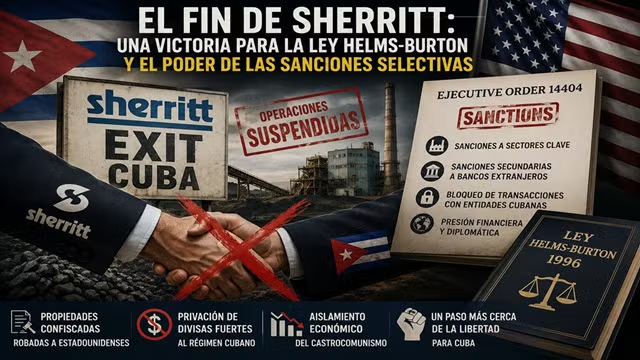 The End of Sherritt: A Victory for Helms-Burton and the Power of Targeted Sanctions
After more than three decades of open defiance, Sherritt International—the Canadian company dubbed by Bloomberg in 1995 and once hailed as Fidel Castro’s “favorite capitalist”—has been forced out of Cuba. On May 7, 2026, Sherritt announced the immediate suspension of all its direct operations in the island’s joint ventures. The trigger was President Donald Trump’s Executive Order 14404, signed on May 1, which expanded sanctions on key sectors and imposed secondary sanctions on foreign banks dealing with blocked Cuban entities. What the Cuban regime celebrated as an exemplary partnership for 35 years collapsed in a single week. This outcome powerfully validates the Helms-Burton Act, particularly its Title III, and demonstrates that sustained, targeted American sanctions against the Castro-Communist regime deliver concrete results by starving it of hard currency.
Sherritt’s journey into Cuba exemplified a deeply concessionary capitalist relationship that fused the regime’s control of expropriated resources with Western capital, technology, and market access. Founded in 1927 as Sherritt Gordon Mines Limited, the company faced near insolvency by 1990. Under Ian W. Delaney—who openly displayed a family photo with Castro and called Cuba his favorite—it turned to Havana in 1991 amid the Soviet collapse and Cuba’s “Special Period.” The linkage of the Moa nickel deposit and Cuba’s processing capacity with Sherritt’s Alberta refinery and its access to low-cost energy proved a stroke of genius for both parties. In December 1994, Sherritt formed a 50/50 joint venture with Cuba’s Compañía General de Níquel de Cuba. The partnership quickly proved profitable, posting $14.3 million in earnings on $131 million in sales in its first quarter.
Read more: The End of Sherritt: A Victory for Helms-Burton and the Power of Targeted Sanctions
- Details
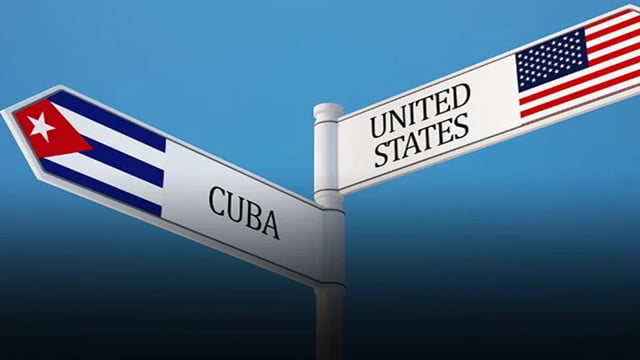 A Tale of Two Cities: Havana and Washington on May Day
May 1, 2026, exposed two radically opposing political realities unfolding ninety miles apart. In Havana, the Cuban communist dictatorship attempted to stage its annual revolutionary spectacle amid visible fear, militarization, and growing insecurity. In Washington, the United States escalated its confrontation with the Castro-Communist regime through a sweeping executive order targeting the financial, political, and repressive architecture sustaining the dictatorship. The contrast was striking: one government desperately trying to manufacture the illusion of monolithic support; the other formally declaring the Cuban regime a continuing threat to U.S. national security and democratic values.
In Havana, the regime had originally planned a massive May Day mobilization at the Plaza Cívica — the monumental square later renamed Plaza de la Revolución after Fidel Castro consolidated communist rule. Historically, the plaza has served as the dictatorship’s preferred stage for choreographed demonstrations of revolutionary unity, giant propaganda rallies, and displays of ideological obedience. But this year, the regime abruptly relocated the main event to the so-called “Anti-Imperialist Tribune” in front of the U.S. Embassy. The explanation offered by state propaganda was predictable revolutionary theater. The real reasons were far more revealing..
Read more: A Tale of Two Cities: Havana and Washington on May Day
- Details
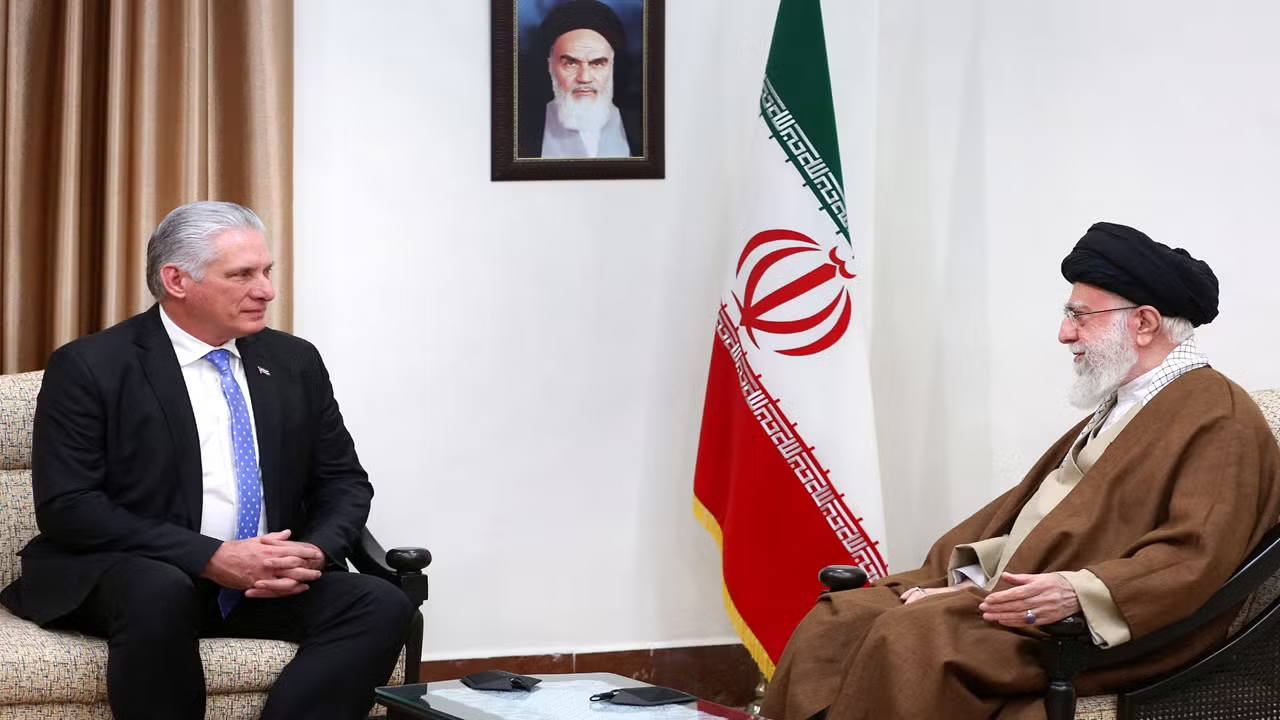 Crush Castroism Now to Finish Islamic Iran
The Islamic Republic of Iran is reeling. Its senior leadership has been decapitated, its missile factories and air defenses lie in ruins, and its conventional military capacity has been gutted. Yet, the regime refuses to fall. Instead, it has pivoted to classic asymmetric warfare: proxy provocations, hostage diplomacy, and relentless media manipulation. Tehran understands that its survival now depends less on battlefield victories than on narrative control. It needs the world’s cameras fixed on Iran, Beirut, and the Persian Gulf so it can play the victim, drag out negotiations, and portray the United States as the desperate party begging for a deal.
This is not speculation. It is the Vietnam playbook updated for the 21st century. The communists in Hanoi never defeated U.S. forces in open combat, but they won the war in American living rooms. Iran is betting the same strategy will work again. Every day the Middle East dominates the news cycle is another day the ayatollahs buy to regroup, rearm through smuggling networks, and wait for American political fatigue to set in. The result is already visible. Washington looks anxious for any face-saving agreement, while Tehran smells weakness. Nothing short of full regime change can assure the West of an end to the possibility of a nuclear jihadist state.
- Details
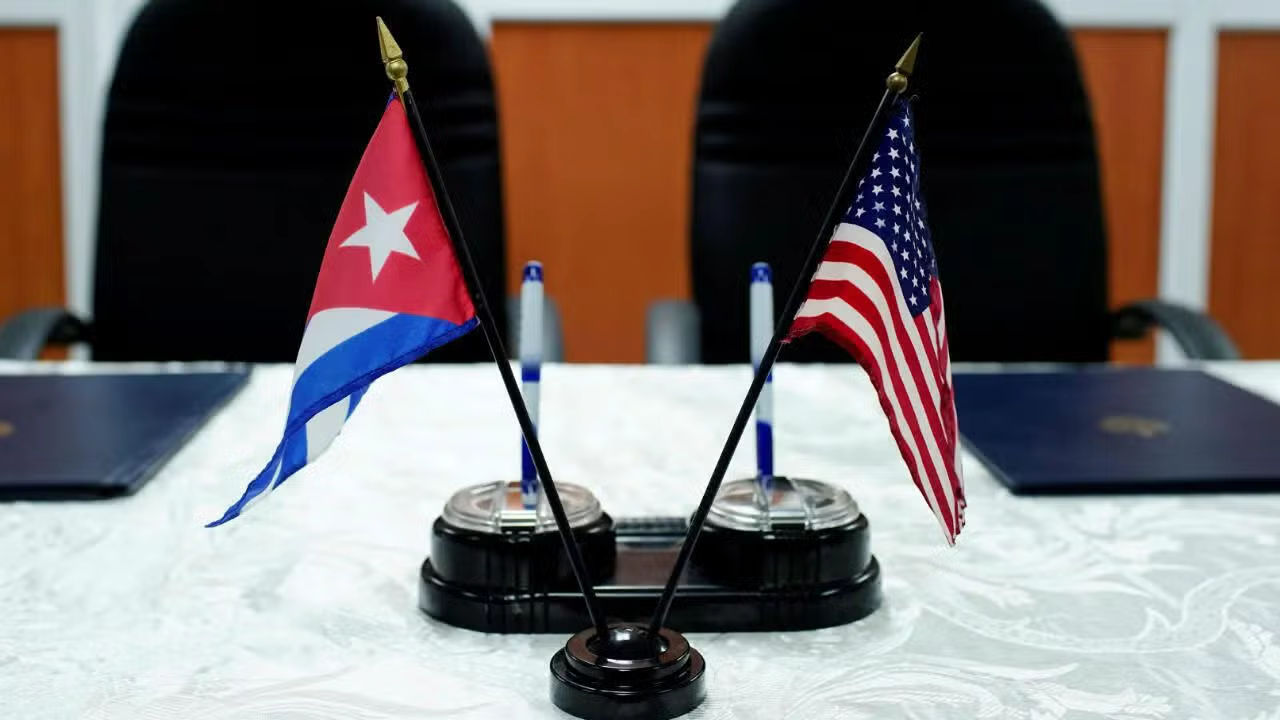 Cuba’s Spy State Next Door: Time to End the Castro Regime
The recent announcement by the Federal Bureau of Investigation (FBI) confirming that communist Cuba has functioned as a persistent and sophisticated espionage actor against the United States and Western democracies since 1959 should surprise no serious observer of the Cold War. Post-Cold War geopolitics. Yet its timing is critical. As the administration of Donald Trump signals an increasingly assertive posture toward Havana—consistent with the strategic direction outlined in the November 2025 National Security Strategy—the report serves not merely as a historical clarification but as a strategic warning.
For decades, the Castro regime has embedded intelligence operations into the very fabric of its statecraft. From the early consolidation of power under Fidel Castro to the present dictatorial leadership of Miguel Díaz-Canel, espionage has not been ancillary—it has been central. Cuban intelligence services penetrated U.S. institutions, cultivated assets across Latin America, and coordinated with adversarial regimes to undermine democratic systems. What is particularly striking in the FBI’s findings is the regime’s sustained commitment to espionage even during periods of acute economic hardship, including the so-called “Special Period” following the collapse of the Soviet Union. This was not opportunism enabled by Soviet subsidies. It was ideological and strategic consistency.
Read more: Cuba’s Spy State Next Door: Time to End the Castro Regime
- Remember the Combative Christ During Holy Week
- Helms-Burton Locks in Regime Change for Cuba
- Cuba’s New “Investment” Law: Castroism’s Piñata
- U.S. Force, or Threat of it, Must Be Used in Cuba
- The Shield of the Americas Summit: A Shield in Defense of Freedom
- Cuba’s Dictatorial Transition Should Not Fool Anyone