
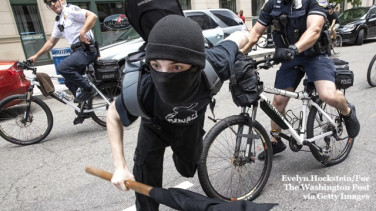
America Reawakens: Combatting the Far-Left Threat
- 07-18-2026America Reawakens: Combatting the Far-Left Threat Leer en Español In a landmark address before representatives from more than 70 countries at the U.S. State Department's Ministerial Conference on...
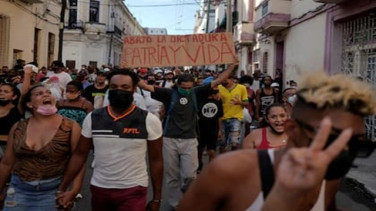
11J at Five: Cuba's Real Unfinished Revolution
- 07-10-202611J at Five: Cuba's Real Unfinished Revolution Photo: REUTERS/Alexandre Meneghini Leer en Español Five years have passed since July 11, 2021 (11J), when thousands of Cubans took to the streets in...
America's 250 th Anniversary: Recovering the Soul of the Republic
- 07-02-2026America's 250 th Anniversary: Recovering the Soul of the Republic Leer en Español The celebration of America's 250th anniversary is more than a commemoration of national independence. It is an...
The Castroist “Reforms”: The Potemkin Façade
- 06-19-2026The Castroist “Reforms”: The Potemkin Façade Leer en Español The Cuban dictatorship’s announcement of 176 economic and social “transformation” proposals should not be mistaken for a historic...
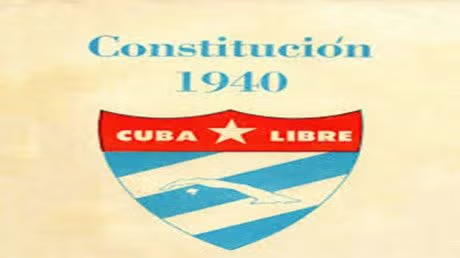
The 1940 Constitution: Cuba’s Democratic Bridge
- 06-12-2026The 1940 Constitution: Cuba’s Democratic Bridge Leer en Español The possibility of a successful democratic transition in Cuba rests upon two historic advantages that distinguish the Cuban case...
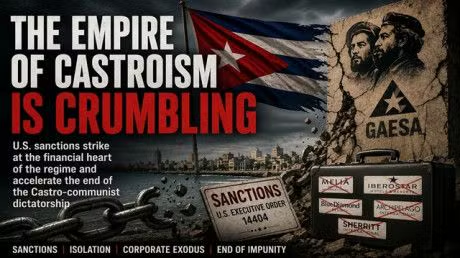
Castroism’s Empire Crumbles
- 06-05-2026Castroism’s Empire Crumbles Leer en Español For decades, opponents of economic pressure against the Castro-Communist regime insisted that sanctions did not work. According to this conventional...
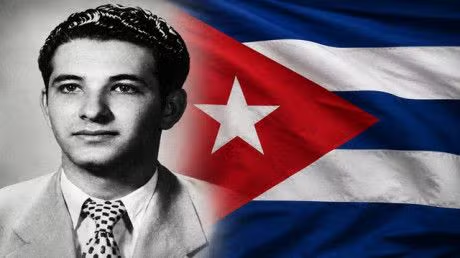
Honoring Pedro Luis Boitel and the Demand for Accountability
- 05-22-2026Honoring Pedro Luis Boitel and the Demand for Accountability Leer en Español This coming Monday, May 25, 2026, marks the 54 th anniversary of the death of Pedro Luis Boitel, a courageous Cuban...
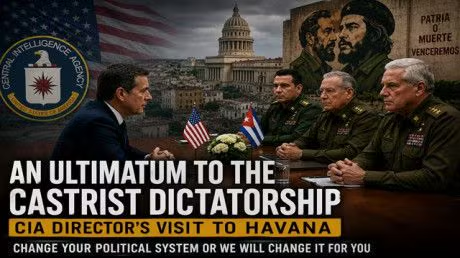
The CIA Director’s Visit to Havana: An Ultimatum in Broad Daylight
- 05-15-2026The CIA Director’s Visit to Havana: An Ultimatum in Broad Daylight Leer en Español The sight is repulsive on its face. A high official of the United States government, the world’s leading...
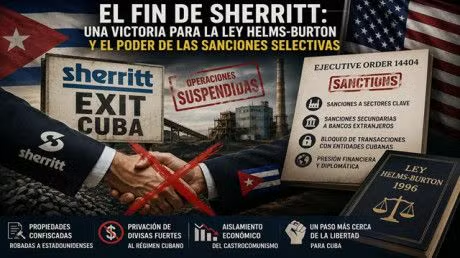
The End of Sherritt: A Victory for Helms-Burton and the Power of Targeted Sanctions
- 05-08-2026The End of Sherritt: A Victory for Helms-Burton and the Power of Targeted Sanctions Leer en Español After more than three decades of open defiance, Sherritt International—the Canadian company...
- Details
 Remember the Combative Christ During Holy Week
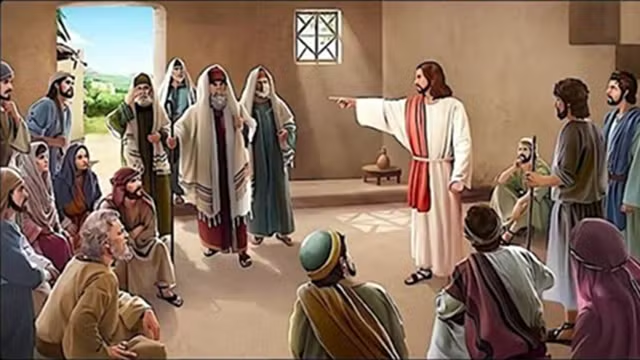
A dangerous distortion has crept into Christian theology across Catholic, Protestant, and Orthodox traditions alike. Jesus is recast as a passive, non-violent conformist—soft-spoken, endlessly tolerant, a gentle shepherd who never raised His voice or challenged the status quo. This caricature serves a purpose: it neuters the Gospel’s call to confront evil and comforts those who prefer a faith that never offends, never fights, never draws a line. Yet the historical record of Holy Week shatters this illusion. Jesus Christ was neither passive nor conformist. He was a warrior for truth, intolerant of evildoers and their enablers, and He displayed that combativeness with unmistakable clarity from Palm Sunday to Good Friday. Far from a docile figure, He embodied the very spirit of righteous confrontation that Scripture demands of every believer.
Jesus was Himself a Jew, born into the majoritarian Jewish population of first-century Judea. So were His disciples. They lived and worshiped within the covenant God made with Abraham, Isaac, and Jacob. Their mission was not to reject Judaism but to fulfill its prophecies. The established high priests, scribes, Pharisees, and Sadducees—who claimed to speak for the faith—had become the very hypocrites Jesus exposed. They did not represent the faithful remnant of Israel. They represented a corrupt religious elite that had traded divine authority for political power and financial gain. Jesus came to call His own people back to authentic covenant fidelity while simultaneously extending salvation to the nations. Christianity, born from Judaism, is therefore not anti-Jewish. It is the completion of Israel’s story. But completion required confrontation.
- Details
 Helms-Burton Locks in Regime Change for Cuba
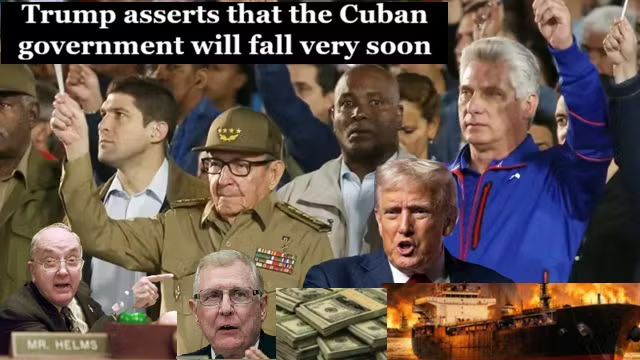
As Donald J. Trump advances his second term with a bold initiative in Cuba, Secretary of State Marco Rubio is playing a central role in crafting U.S. foreign policy. The administration has already escalated pressure through a sweeping oil blockade. U.S. authorities are actively blocking oil shipments to the regime—via seizures of tankers, threats of tariffs on any nation supplying fuel, and targeted sanctions—while allowing limited deliveries to Cuba’s non-state sector to avoid societal collapse, even if these actors are regime-connected.
This maximum-pressure campaign has intensified the island’s energy crisis, yet speculation persists in some quarters about possible future economic liberalization or similar deals with Havana., without instituting radical political changes Some fear premature easing of sanctions; others hope for quick relief. Both groups should rest easy. Any American president, including Trump, is strictly bound by the Cuban Liberty and Democratic Solidarity (LIBERTAD) Act of 1996—better known as the Helms-Burton Law. This statute codifies the U.S. embargo into law and makes its lifting contingent on verifiable, irreversible democratic reforms in Cuba. No executive whim, no back-channel deal, no “humanitarian” exception can bypass it without triggering legal and congressional roadblocks.
- Details
 Cuba’s New “Investment” Law: Castroism’s Piñata
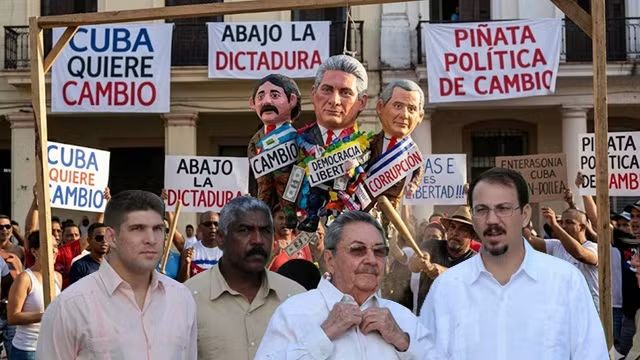
On March 16, 2026, communist Cuba’s Deputy Prime Minister and Minister of Foreign Trade and Investment, Oscar Pérez-Oliva Fraga, announced a sweeping change. Cubans living abroad—regardless of residency status—may now invest in, own, and partner in private businesses on the island, including larger infrastructure projects. The Castro regime framed it as an opening to the diaspora. In reality, this decree is the opening act of a carefully orchestrated wealth-transfer heist designed to launder the Castro-Communism’s hidden offshore billions back onto the island under the guise of “legal” private investment. It is Cuba’s transition into Putinism.
The parallels with post-Soviet Russia are unmistakable. After the USSR collapsed, the nomenklatura—high-ranking Communist Party officials, their families, and the security apparatus—engineered a fraudulent “privatization” scheme. State assets were auctioned at fire-sale prices to insiders who had already siphoned wealth abroad through front companies. The result was not capitalism but kleptocracy: a new oligarch class drawn directly from the old regime. Cuba is now replicating that model. Regime insiders who parked fortunes in offshore vehicles will soon “invest” those same funds back home, acquiring legal title to businesses while ordinary Cubans remain trapped in poverty. The dictatorship’s own financial architecture makes the scheme possible.
- Details
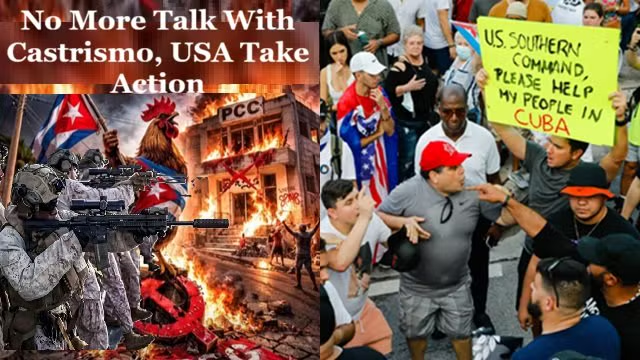 U.S. Force, or Threat of it, Must Be Used in Cuba
Cuba is not merely authoritarian. It is a totalitarian regime. For over six decades, the Castro-Communist apparatus has exercised total control over every sphere of Cuban life: political, economic, cultural, and personal. Unlike authoritarian systems that tolerate limited private spheres or gradual openings, totalitarianism in Cuba demands absolute ideological conformity and the eradication of independent civil society. This distinction is not semantic. It is decisive. Transitions to genuine democracy from totalitarian regimes require a complete overhaul of the political sphere. Half-measures that focus on economic tweaks here and limited private enterprise there do not erode the foundations of power. Instead, they entrench the dictatorship by providing it with new resources and legitimacy.
History proves this point. Economic reforms without radical political change and the establishment of the rule of law only solidify totalitarian control. China, Vietnam, and Russia are examples. The regime’s survival strategy has always been to extract concessions from the West while preserving its monopoly on violence and ideology. Today, Castro-Communism is buying time. It hopes to dupe the Trump administration into believing that dialogue and incremental gestures will lead to power-sharing. This is a delusion. The dictatorship will never voluntarily relinquish control. The mere credible threat of viable military action—or the action itself—remains the only mechanism capable of forcing an end to the regime.
Read more: U.S. Force, or Threat of it, Must Be Used in Cuba