
Latest News from Cuba
- Details
- Source/Author: The CubanAmerican Voice
 Invitation: 15th Conference on Cuban and Cuban American Studies
The Cuban Research Institute (CRI) FIU
Patria de Martí y The CubanAmerican Voice
We are pleased to invite you to the event:
15th Conference on Cuban and Cuban American Studies
CUBA: THE DAY AFTER TOMORROW
Read more: Invitation: 15th Conference on Cuban and Cuban American Studies
- Details
- Source/Author: Jose Tarano
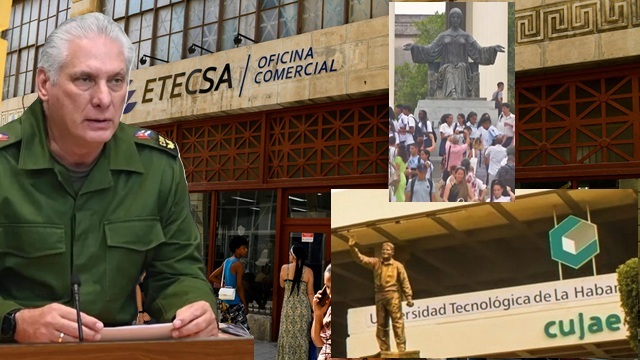 Díaz-Canel Threatens Cuban Students with War Rhetoric
Cuba: From Student Fee Hikes to the Regime's Bellicose Language
The student movement that has shaken Cuban universities since early June is not simply a protest against internet fees. It is the desperate cry of a generation that refuses to bear on their shoulders the weight of decades of economic mismanagement and authoritarianism, despite the indoctrination the dictatorship has subjected them to.
Beyond the "ETECSA Fee Hike"
What began as an academic strike at the Faculty of Mathematics and Computer Science of the University of Havana against ETECSA's new internet rates quickly became something much deeper. Students are not protesting solely about the cost of mobile data, but about the fundamental right to access information, education, and communication.
The voices of these young people are clear and forceful:
"The people cannot be the ones who have to bear this economic burden," expressed one of the students. This phrase perfectly summarizes the core of the conflict: a population exhausted from subsidizing with their poverty the deficiencies of a system that promised prosperity and equality but delivers scarcity and inequality.
A Generation That Will Not Be Silenced


Read more: Díaz-Canel Threatens Cuban Students with War Rhetoric
- Details
- Source/Author: Keith Naughton
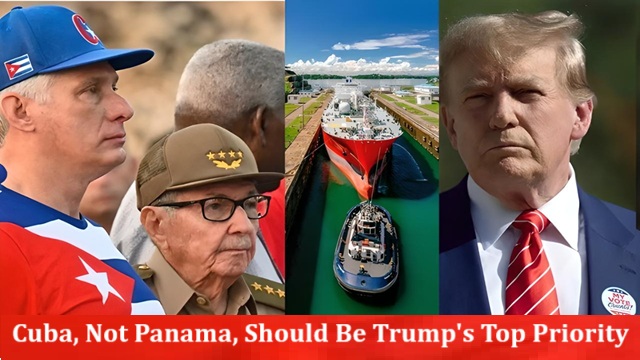 Cuba, Not Panama, Should Be Trump's Top Priority
President-elect Donald Trump wants a deal. From out of nowhere, the incoming president decided one of his first foreign policy pronouncements would be a demand to better terms for passage in the Panama Canal, after not mentioning a word of it on the campaign trail.
Naturally, he amped up the rhetoric for a time, only to move on to an old hobbyhorse, buying Greenland — an 836,000 square mile fixer-upper, whose name proves that in real estate, if you’re not lying, you’re not trying.
If Trump can get a special canal EZ-Pass discount, that’s great. But that’s not the problem. The issue is one of priorities.
America’s economic and security problems in Latin America do not start or end with canal tolls. Drug smuggling, illegal immigration and political instability in Mexico are, by far, the biggest crises. Fortunately, Team Trump has been focusing on those issues.
What comes next is not Panama, it is Cuba. And after that, the most pressing are Venezuela and Nicaragua. Panama Canal tolls might not even make a top 10, taking into consideration lawless Haiti, unstable Honduras and Guatemala and money laundering, well, everywhere.
- Details
- Source/Author: Michael Lima
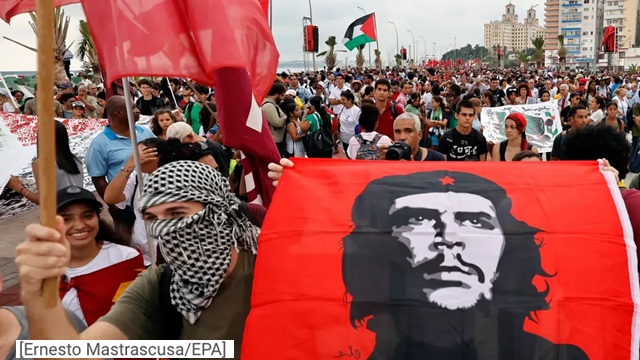 Why Reinstating Cuba’s Terror Sponsor Label Is Correct?
Drug Routes, Spy Stations, Narco-Terror, Hezbollah, Hamas: Why Reinstating Cuba’s Terror Sponsor Label Is Correct?
Had Biden’s executive order remained in place, it would have undermined U.S. national security and emboldened dictators worldwide: Lima
The re-designation of Cuba as a State Sponsor of Terrorism is not just warranted—it is a vital safeguard for U.S. national security. For decades, the Cuban regime has provided logistical and material support to terrorist organizations, harbored fugitives, and engaged in destabilizing activities that directly threaten American interests. Although President Barack Obama rescinded this designation in 2015, the overwhelming evidence of Cuba’s continued involvement in terror-related activities led President Donald Trump to reinstate it in January 2021. Yet, in a behind-the-scenes diplomatic deal brokered by the Vatican, the Biden administration removed Cuba from the list on January 14, 2025, in exchange for the Cuban regime’s announcement that it would conditionally release 533 political prisoners—only for the decision to be swiftly reversed shortly thereafter by President Donald Trump in his first executive order of his new term.
The reinstatement of Cuba’s State Sponsor of Terrorism designation is not only justified—it is essential for exposing the regime’s decades-long ties to terrorist organizations and addressing its ongoing threat to U.S. national security. With this decision, the U.S. reimposed critical sanctions on military-controlled entities, cutting off the financial lifelines the regime depends on to suppress internal dissent and extend its authoritarian reach abroad.
Official denials aside, all evidence points to a negotiation between the Biden administration and the Cuban regime. The near-simultaneous timing of their announcements reveals a calculated political deal. Under the guise of benevolent gestures to the Vatican, Havana once again exploits the suffering of Cubans imprisoned for exercising fundamental human rights—totaling around 1,161, more than half of those included in the announced excarcerations—using political prisoners as bargaining chips, as it has done throughout its history.
Read more: Why Reinstating Cuba’s Terror Sponsor Label Is Correct?
- The Exile That Hurts
- The Sugar King is Now a communist Beggar
- The Funeral of the Ration Book and Socialist Equality (Updated)
- Is Armed Conflict the Only Alternative for Cuba’s Freedom?
- Invitation Permanent Exhibition 'The Cuban Experience'
- Marco Rubio Debunks the Castro Regime’s Myth About the Blockade